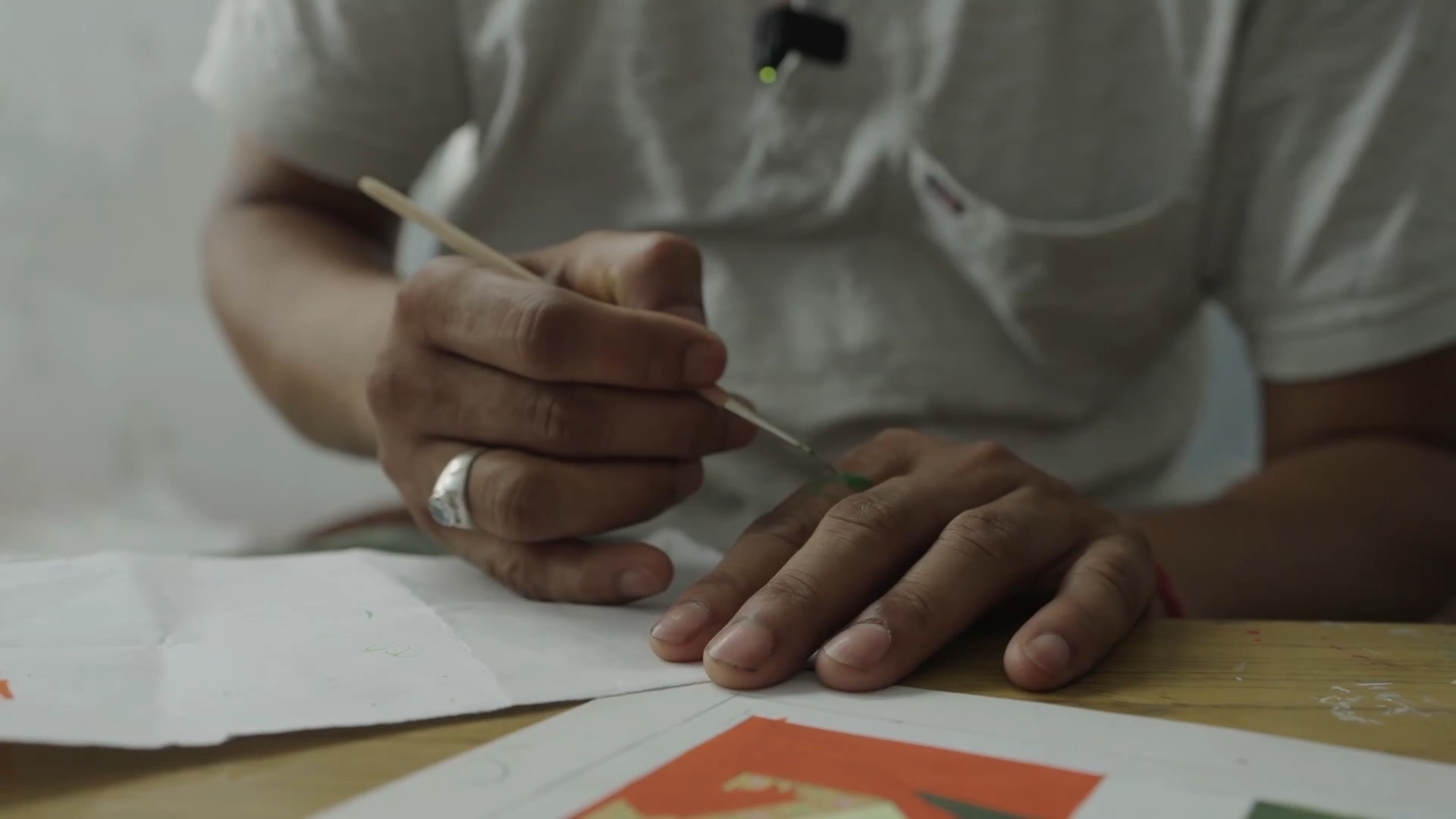
A still from Inheritance: an artist's hands holding a fine brush above a Kangra painting

A documentary by Radha Bahl

Inheritance

Inheritance enters the world of Kangra painting through the artists, teachers and practitioners who keep the craft alive — asking a simple question: what keeps a tradition alive?

Watch

Inheritance, in full

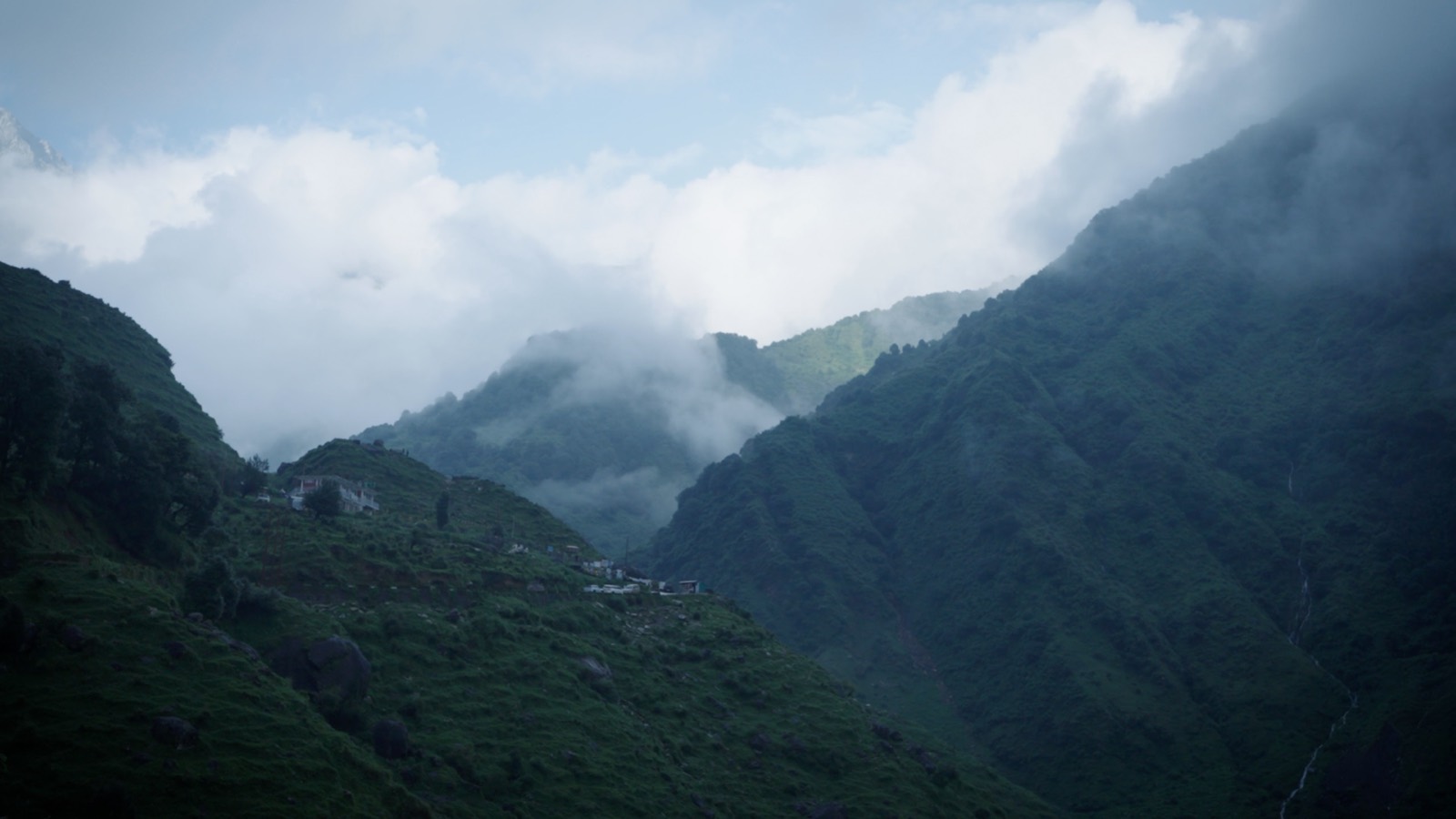
Mist drifting across forested Himalayan ridges in the Kangra Valley

Having trouble with the player? Open the film in a new tab ↗

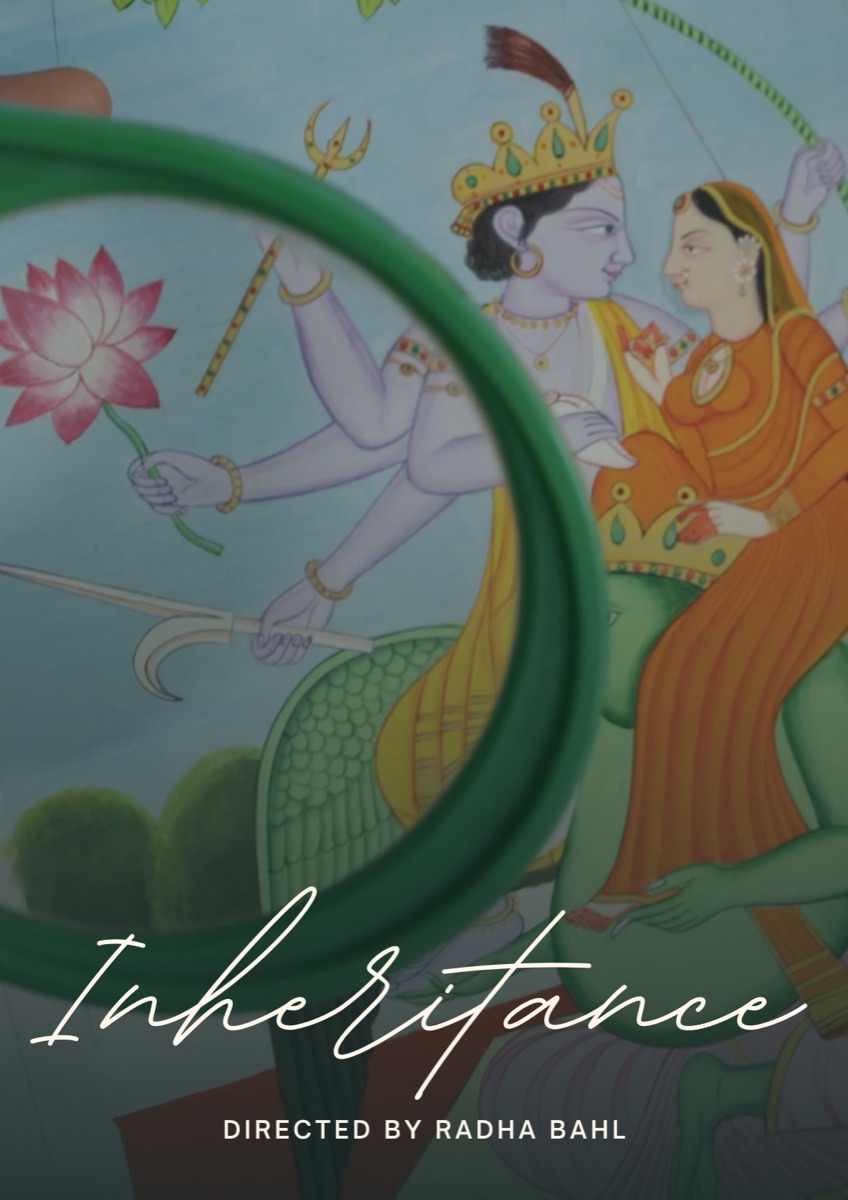
Poster for Inheritance, showing a magnifying glass over a Kangra miniature of Vishnu and Lakshmi

The film

Synopsis

Nestled in the Himalayan foothills of Himachal Pradesh, the Kangra Valley is home to a centuries-old painting tradition shaped by its mountains, rivers, forests and cultural life. Known for its delicate brushwork and intricate compositions, Kangra miniature painting has passed from one generation to the next, carrying with it not only a style of painting, but a deep connection to place and memory.

But what does it mean for a tradition to continue in the present day?

Inheritance enters the world of Kangra painting through the artists, teachers and practitioners who keep the craft alive. From the landscapes that inspired the tradition to the quiet discipline of the studio, the film observes the process of learning, practising and passing on a form that demands patience, precision and years of dedication. Among its newer practitioners are artists training through Chinmaya CORD, becoming part of a lineage that has evolved across generations.

Rather than looking at heritage as something fixed in the past, the film explores how traditions survive by finding new practitioners and new meaning. In the exchange between teacher and student, landscape and artist, past and present, Inheritance asks a simple question: what keeps a tradition alive?

Director
Radha Bahl
Subject
Kangra miniature painting
Location
Kangra Valley, Himachal Pradesh
With
Chinmaya Organisation for Rural Development (CORD)

The central question

What keeps a tradition alive?

The film explores the idea that heritage is not preserved simply through museums, archives or historical recognition. Instead, traditions continue because they are practised, shared and reinterpreted by people who find meaning in carrying them forward. Through Kangra painting, the documentary asks what it truly means to inherit culture in the present day.

Why this story

Two conversations, told as one.

Across India, countless traditional art forms continue to navigate a rapidly changing world. Their challenge is not simply survival, but continuity — finding new practitioners, creating meaningful livelihoods and remaining relevant within contemporary society.

At the same time, conversations around disability often remain confined to narratives of limitation or welfare, overlooking the skills, contributions and creative practices of people with disabilities.

Inheritance brings these conversations together without allowing either to dominate the other. The film is not about rescuing a disappearing tradition, nor is it about portraying disability through inspiration or charity. Instead, it explores how cultural heritage grows stronger when knowledge becomes more accessible, and how artistic practice can create dignity, independence and belonging.

Ultimately, the documentary asks us to reconsider heritage not as something frozen in the past, but as a living relationship between landscape, community and those who continue to practise it.

Themes

  • Living heritage
  • Cultural continuity
  • Place and identity
  • Inclusion through art
  • Livelihood and dignity
  • Intergenerational learning
  • Landscape and memory
  • Tradition in contemporary India

From the film

Film stills

Ten frames from the valley, the studios and the hands that keep Kangra painting going.

  • The valley that paints
  • A lineage of brushwork
  • Keepers of the record
  • The master’s desk
  • Under the glass
  • Leaf by leaf
  • Another way of speaking
  • The work of CORD
  • Knowledge, passed by hand
  • Someone chooses to learn

Narrative structure

Five chapters

  1. Chapter one

    The Valley That Paints

    The film opens with the Kangra Valley itself. Mist drifts across the mountains, rivers weave through forests and morning light settles over the landscape that inspired one of India’s most celebrated miniature painting traditions. Rather than functioning simply as a backdrop, the valley is introduced as the first storyteller, shaping the colours, subjects and visual language of Kangra painting for centuries. Through conversations with historians and traditional practitioners, alongside close observations of historical works, the audience is invited to understand how geography, culture and artistic practice have always been deeply intertwined. Before meeting those who practise the art today, the film first establishes the place from which it emerged.

  2. Chapter two

    A Living Tradition

    Having established the origins of Kangra painting, the documentary shifts its attention to the present, asking what it means for a traditional art form to remain alive. Master painters and teachers reflect on the years of discipline required to learn the craft, the importance of apprenticeship and the responsibility of passing knowledge forward. Rather than presenting Kangra painting as a fading tradition, this chapter explores the quieter challenge of continuity — how an art form remains relevant by continuing to be practised, taught and embraced by new generations. The question of inheritance begins to emerge as the central thread of the film.

  3. Chapter three

    New Custodians

    The audience is introduced to Chinmaya CORD, not as the subject of the documentary, but as the bridge connecting new artists with a centuries-old tradition. Through its Kangra painting programme, new artists — among them artists with disabilities — are given the opportunity to learn from experienced practitioners while developing meaningful livelihoods through their work. The chapter explores how heritage and inclusion intersect, demonstrating that preserving culture is not only about protecting the past, but about expanding who has access to it. CORD’s work reveals that traditions remain strongest when they continue to welcome new participants into their lineage.

  4. Chapter four

    The Artists

    At the heart of the documentary are the artists themselves. Through an observational approach, we spend time with them inside and outside the studio, witnessing the quiet rhythms of learning, practising and refining an extraordinarily detailed craft. Their stories unfold through everyday moments rather than dramatic testimony, allowing the audience to encounter them first as artists rather than through the lens of disability. Conversations with families and mentors reveal how Kangra painting has become a source of confidence, purpose and meaningful work, while the process of creating each painting reflects the patience and dedication that have always defined the tradition.

  5. Chapter five

    Carrying the Tradition Forward

    As the film draws to a close, it returns to the central question that has guided the journey from the beginning: what keeps a tradition alive? The answer is found not in museums or monuments, but in the quiet, everyday act of passing knowledge from one person to another. Through moments of teaching, careful observation and patient practice, we witness Kangra painting continuing as it always has — through relationships, repetition and a shared commitment to the craft. The exchange between teacher and student becomes a powerful reminder that every tradition survives because someone chooses to learn, and someone chooses to teach.

    Interwoven with these moments, the landscapes of the Kangra Valley return once more. The rivers, forests and mountains that inspired generations of painters become a silent thread connecting the past with the present. The valley is no longer simply the setting of the film, but an enduring presence that continues to shape the art and those who practise it.

    For the artists at Chinmaya CORD, Kangra painting represents far more than the acquisition of a traditional skill. It has become a source of confidence, meaningful work and economic independence, allowing them to be recognised not for their disabilities, but for their artistry. As they inherit and contribute to this centuries-old practice, they become active participants in its continuing story — Kangra painting continues, not as a relic of the past, but as a living tradition carried forward into the future.

Craft

Visual language

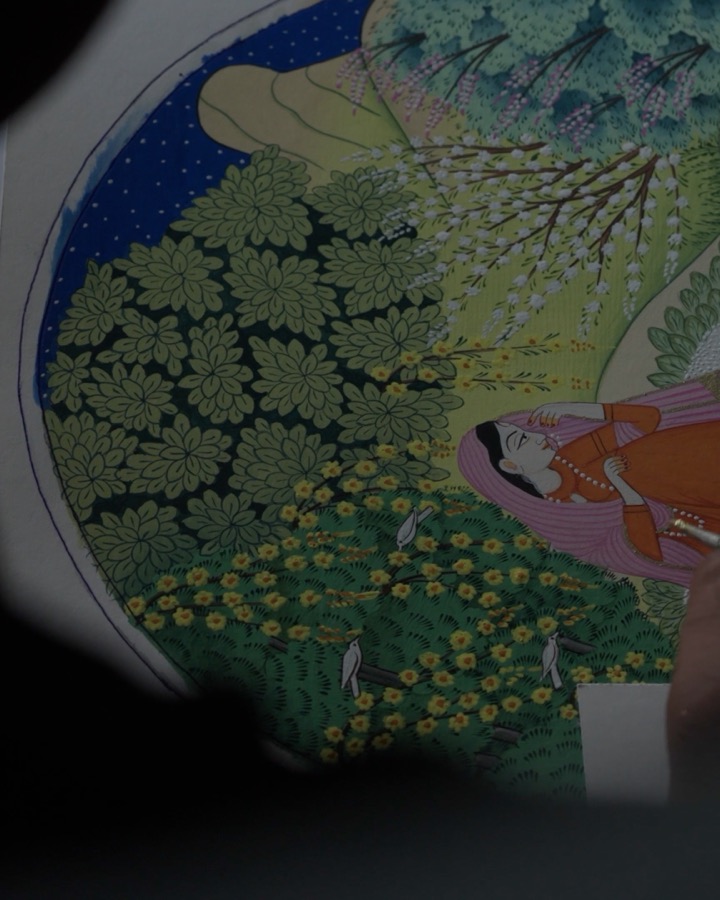
The visual language of Inheritance draws inspiration from the qualities of Kangra miniature painting itself. The camera moves patiently, favouring observation over spectacle and allowing small gestures to carry emotional weight. Close attention is given to the tactile process of making: pigments being prepared, brushes meeting paper, steady hands building intricate details and the quiet concentration of artists immersed in their work.

Running parallel to these intimate moments is the landscape of the Kangra Valley. Mountains, forests, rivers and changing light become recurring visual motifs, creating an ongoing dialogue between the place that inspired the tradition and the people who continue to practise it. Rather than treating the landscape as scenery, the film positions it as a living presence whose rhythms echo throughout the artistic process.
Sound design

The soundscape embraces stillness and immersion, allowing the environment to shape the emotional experience of the film. Natural sounds — the flow of rivers, birdsong, wind moving through trees and the subtle textures of the studio — form the foundation of the soundtrack. The scratching of a fine brush across paper, the grinding of pigments and the quiet exchange between teacher and student become central sonic elements.

Music is used sparingly, allowing silence to hold equal significance. For those among the film’s artists who have hearing disabilities, silence is not treated as absence, but as another way of experiencing attention, concentration and communication.

A fine brush meeting paper as a Kangra miniature takes shape
Behind Inheritance

Director’s note

Radha Bahl

Radha Bahl is a student, writer and first-time documentary filmmaker. She is the author of Hasta Kalā, a hands-on workbook introducing children to Indian folk art traditions, and the founder of the Hasta Kalā label, which turns end-of-roll fabric into hand-finished pieces carrying those same traditions. Her wider research looks at economic empowerment and self-reliance for rural women — the thinking that led her to Chinmaya CORD, and from there to this film.

I have always been interested in stories that explore the relationship between people, place and memory. Traditional art forms are often celebrated as symbols of history, yet their future depends not on museums or archives, but on the individuals who continue to practise them.

What drew me to this story was the unexpected convergence of two journeys. On one hand is Kangra painting, an artistic tradition deeply rooted in the geography and cultural memory of the valley. On the other is a community of artists who are discovering confidence, purpose and independence through learning that very tradition. Rather than presenting these artists through a lens of charity or inspiration, I want to observe them simply as artists — learning, making mistakes, refining their craft and becoming part of a lineage that has endured for centuries.

At its heart, Inheritance is not a film about preserving the past. It is about understanding how culture remains alive. Heritage survives because it continues to be practised, shared and reimagined by people who find meaning in carrying it forward. This film is an invitation to witness that process of inheritance as it unfolds today.

— Radha Bahl, director

Closing statement

Every tradition begins as someone’s practice. Every tradition survives because someone chooses to continue it.

Inheritance is a film about those who choose to carry Kangra painting into the future, ensuring that its story continues to be written through new hands, new voices and new generations.